SaaS / AI
PrismDraft
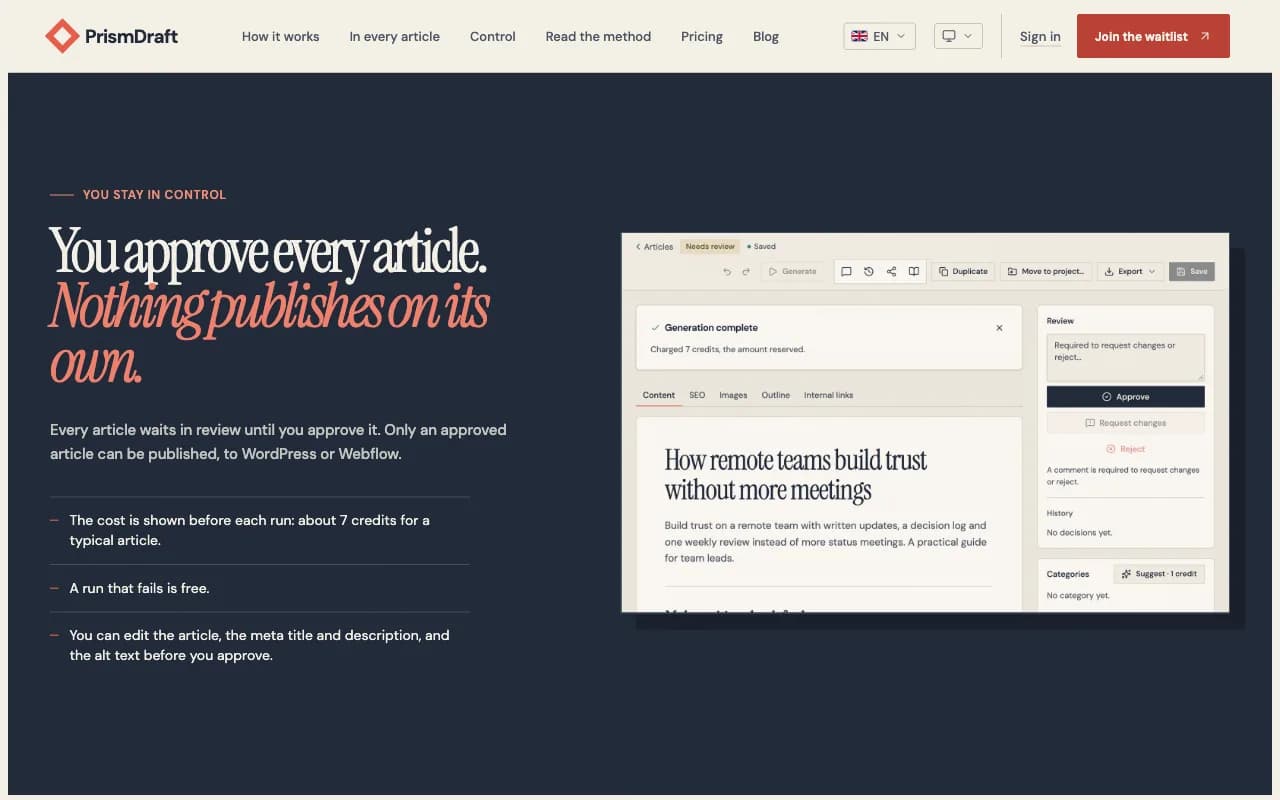
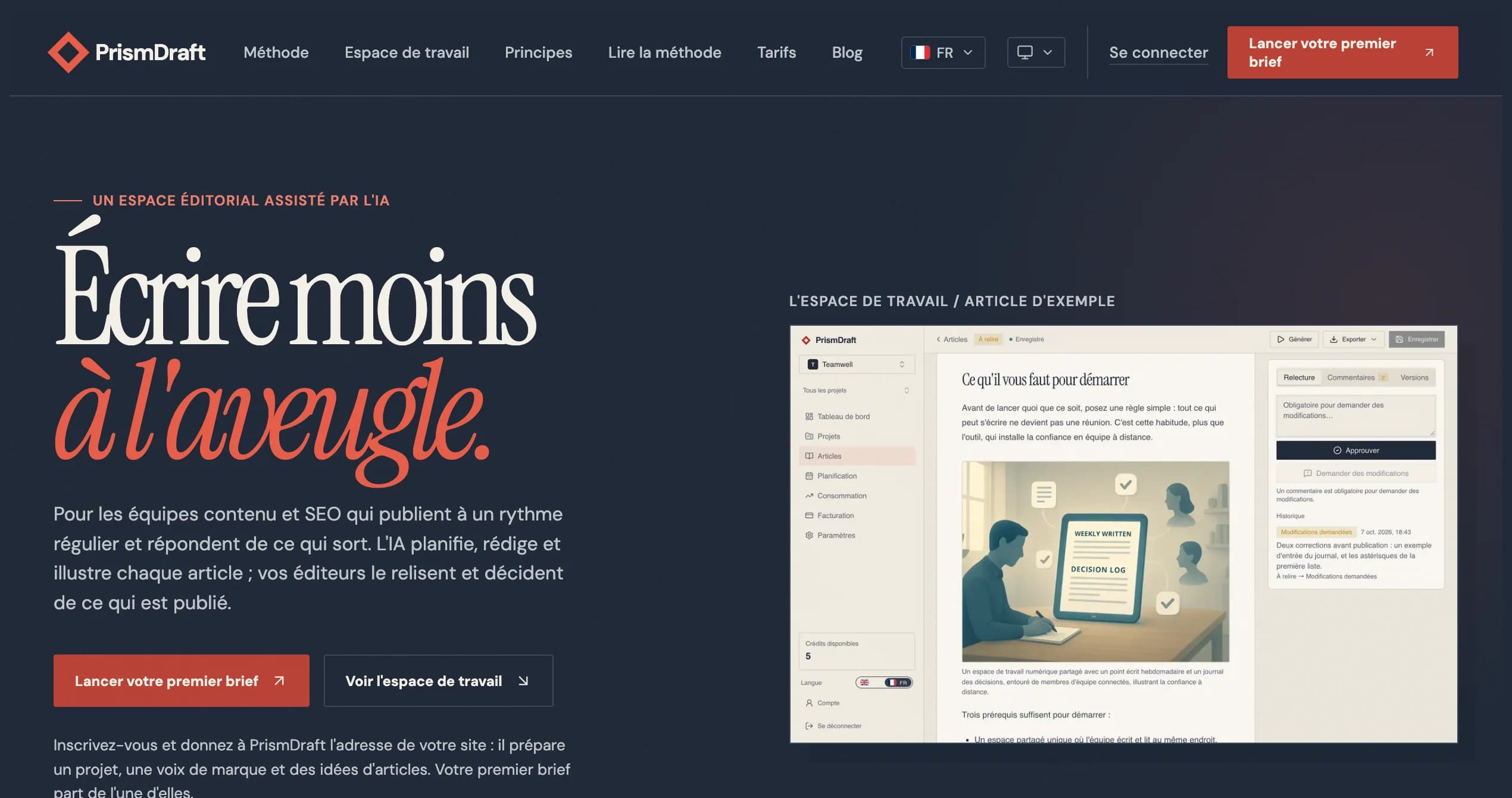
AI editorial workspace for content and SEO teams: editable outline, AI-written draft, generated images and human approval before publishing.
- Type
- SaaS / AI
- Website
- prism-draft.com
- Stack
- TypeScriptReactTanStack StartFastifyPostgreSQLRedisDocker
95/100
Lighthouse performance, desktop
87/100
Lighthouse performance, mobile
100/100
Lighthouse accessibility
100/100
Lighthouse best practices
Lighthouse 13.5 measures on the home page, run locally on 16 October 2026.
About this project
PrismDraft is a SaaS for content and SEO teams. The AI proposes an outline that the team edits and approves, writes the draft section by section in the project's brand voice, and generates images from each section. Nothing is published without human approval, and articles can be sent to WordPress, Ghost, Webflow, Shopify or a signed webhook. This blog is served from PrismDraft.
What I delivered
- Multi-user workspace with roles, review and approval workflow
- AI pipeline: outline, section-by-section drafting and image generation, run as background jobs and billed in credits
- Stripe payments, credit wallet and Abby invoicing
- Publishing integrations: WordPress, Ghost, Webflow, Shopify, signed webhook and Markdown/ZIP export
- Fastify API documented in OpenAPI with a client SDK, containerised and deployed on my own Dokploy server
My role
Personal project: product design, development, hosting and production release (API, web app, worker, billing, deployment).
PrismDraft project context
Teams that run a blog lose weekends writing SEO-structured articles. I wanted a tool that starts from the website, suggests topics, writes with images, and never publishes without human approval.
Solution
An AI-assisted editorial workspace: an editable outline approved before any writing, a draft written section by section in the project’s brand voice, images generated from each section, then human review and approval.
Outcome
Nothing is published without human approval. Articles go to WordPress, Ghost, Webflow, Shopify or a signed webhook, with roles, version history and an audit trail.
Technical challenge
The product sells credits: a double click or a replayed Stripe webhook must never create or spend extra credits. I used an append-only ledger, conditional writes inside transactions and idempotency keys.
Key features
- Topic suggestions from a website address
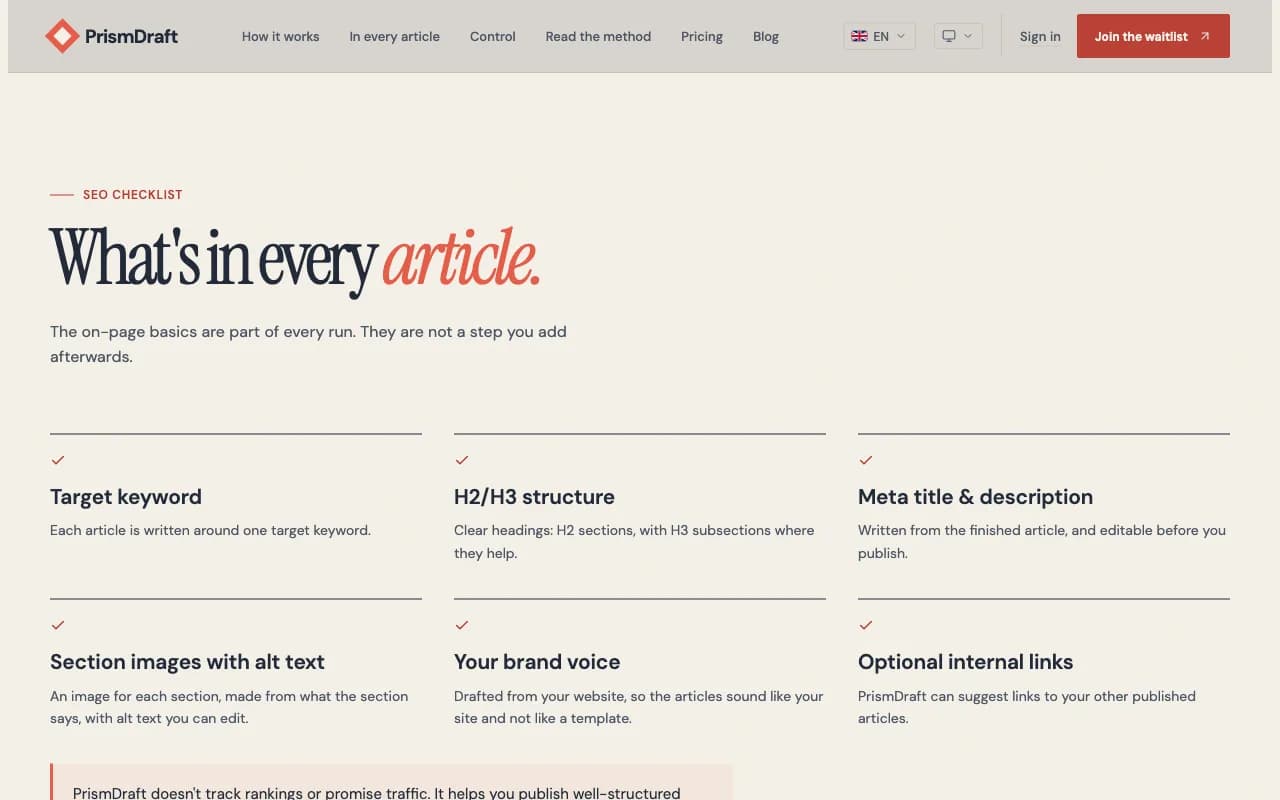
- Article with H2/H3 headings, meta title, meta description and images with editable alt text
- Mandatory human approval before any publishing
- Credit cost shown before each generation
- App and public pages in French and English
- Publishing to WordPress, Webflow, Ghost or Shopify