Website Creation in Chartres: How to Choose Your Provider Without Making a Mistake
Freelancer, agency or online tool? Questions to ask, red flags, what a quote should include: the guide to choosing your web provider in Chartres.
Why Choosing the Right Web Provider in Chartres Makes All the Difference
A website is not a static shop window. It's a working tool: it should showcase your business, build trust, generate inquiries and grow with you. When you're having a website built in Chartres, the choice of provider matters far more than the choice of design.

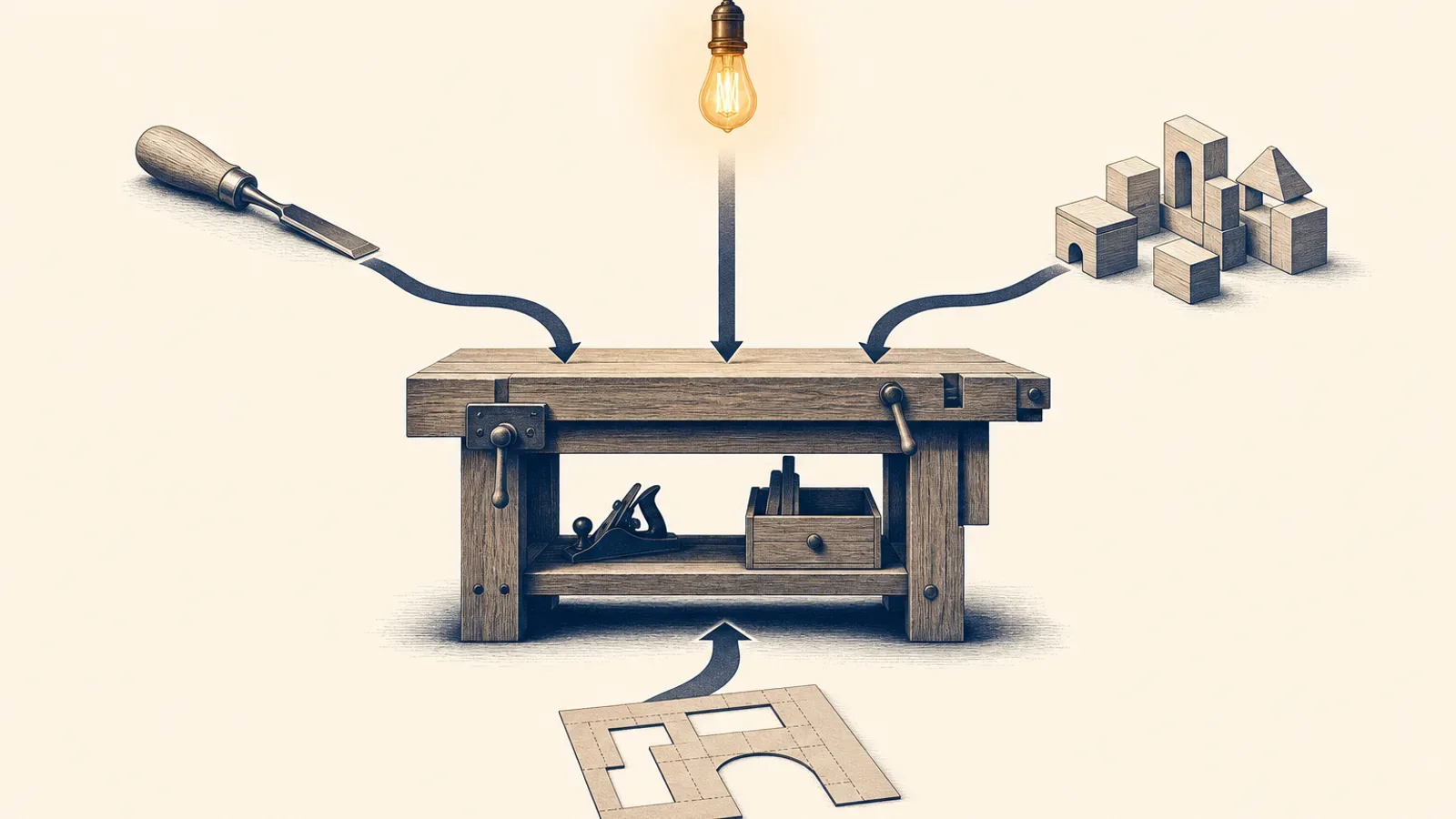
This article takes a craftsman's approach to the web: pragmatic, with no empty promises. By the end, you'll know how to compare your options, ask the right questions and check how reliable each candidate is before choosing a web provider.
Freelancer, agency or website builder: which option suits your business?
There are three routes, and none wins every time. The right choice depends on your needs, the time you can devote to the project and how you expect the site to evolve.
- Freelancer: direct scoping and flexibility, but limited capacity. A freelance web developer in Chartres is often a good fit for a well-defined project.
- Agency: a team and set processes, at the cost of a longer chain of communication. A web agency in Chartres is better suited to projects that need several skill sets.
- Website builder: a quick start, but maintenance and scalability are on you.
Freelancer or web agency: it all comes down to scoping.
The freelancer: a single point of contact, limited capacity
Working with a freelancer means talking directly to the person who designs and builds your site. No middleman, quick decisions, and a custom showcase website tailored to your business. An independent webmaster in Chartres can adjust the project as it goes along.
The limits are real:
- their availability depends on their workload;
- everything rests on one person;
- if they're absent or unwell, continuity isn't guaranteed.
Ask how ongoing support is organized, and where the access credentials are kept.
The web agency: a team, set processes, a more structured framework
A web agency in Chartres brings together several disciplines: design, development, project management. Each person keeps to their own area, and the project moves forward with milestones, follow-up and continuity if someone is away.
The price of this framework: a longer decision-making chain. Approvals pass through several hands.
On a small project, your contact may also be little involved. Ask who is running your project, and who is actually working on it.
Wix or WordPress on your own: when it's enough, when it holds you back
Wix or WordPress work well when your needs are simple: a website for a tradesperson with a few pages, contact details and a contact form. Getting started is quick, and you keep control of the text.
The limits show up over time:
- customization restricted by templates;
- performance dependent on the plugins you add;
- SEO that you have to set up yourself;
- dependence on the platform, and updates that are your responsibility on WordPress.
If the site needs to generate inquiries, these points matter.
The criteria that really matter when choosing
Six criteria let you make a serious comparison, without relying on design alone:
- Understanding of your business: the provider restates your needs and your customers in their own words.
- Clear scoping: scope, stages and deliverables are put in writing.
- Quality of past work: it can be verified.
- Performance: the site loads quickly, including on mobile.
- Maintainability: another developer can take over the project.
- Support after delivery: updates, fixes, training.
For a website for a small business or a showcase site in Eure-et-Loir, check the past work yourself. Visit the sites on your phone. Test their speed with a free tool like PageSpeed Insights.
Ask about the context and the provider's exact role: did they do everything, or only the design? Finally, contact a former client.
Questions to ask before you sign
Before signing, ask these questions and insist on written answers, ideally in the quote and the project brief:
- What are the project's stages and milestones?
- How many rounds of revisions are included, and what happens beyond that?
- What are the deadlines, and what do you need from us to meet them?
- Who writes the content and supplies the images?
- Who handles maintenance, updates and backups?
- Where is the site hosted?
- How does the site comply with GDPR (legal notices, cookies, forms)?
- Will you be trained to edit the site on your own?
One last question takes priority over the rest: who will own what at delivery?
Who owns the site, the domain name and the code after delivery?
The site should remain your property once delivered. Three points to lock down:
- Domain name and hosting: they must be registered in your name, with you as the holder. Otherwise, changing provider turns into a power struggle.
- Access: ask for the administrator credentials for the site, the domain and the hosting.
- Code and visuals: specify in writing whether it's an assignment or a license, and what you're allowed to do with them.
All of this should be settled in the contract or the quote, not verbally.
Being local to Chartres and Eure-et-Loir: a real advantage?
A face-to-face meeting has real benefits. Communication flows more easily, and a provider based in Eure-et-Loir knows the local business landscape: competitors, customers, buying habits. That helps with local SEO in Chartres and with setting up your Google Business Profile properly.
But being nearby isn't enough. A well-organized provider who is farther away can run a project efficiently over video calls. Judge the method, the milestones and the quality of execution first. Distance comes second.
Warning signs to watch for
Some signs should make you slow down:
- Guaranteed results: a "first place on Google" promised in advance. Nobody controls the algorithm.
- Vague quote: no scope, no breakdown of services.
- Refused access: hosting, domain name or administration kept by the provider.
- No written contract.
- Unverifiable past work: no URLs, no client you can contact.
- Pressure to sign quickly.
- Delivery without legal notices or GDPR compliance.
Even one of these is enough to warrant questions.
Understanding a quote without getting lost
A clear website quote details what you're getting, not just a total. For a showcase site, check these points:
- the scope: number and list of pages, features (form, map, blog);
- the design, the content (who writes it, who supplies the images) and basic SEO;
- hosting and domain name, with the holder named;
- deadlines, payment terms and the number of revisions included;
- acceptance testing, maintenance and ownership of the code.
A solid quote follows from a project brief, even a simple one. The quote and the brief should match point by point. Anything left vague today becomes an extra cost tomorrow.
FAQ: your questions about choosing a web provider
Do you need a local provider? Not necessarily. Being nearby helps communication, but method and quality of execution matter more.
Freelancer or agency? A freelancer suits a well-defined project, an agency suits a project that needs several skill sets.
Who owns the site? You do, if the contract says so: domain, access, code and visuals.
What should you check in a quote? Scope, deadlines, included revisions, maintenance and ownership. That lets you choose a web provider with full knowledge of what you're getting.
Conclusion: taking action from Chartres
For your website project in Chartres, move forward step by step. Start by defining your needs. Then compare two or three providers, ask the right questions, and insist on a detailed quote that also spells out who owns the site.
If you'd like an outside opinion before committing, let's talk. A no-obligation scoping meeting is enough to clarify your priorities.